நாற்பத்தி ஐந்து கோடி வருடங்களுக்கு முன்பு தோன்றிய பூமி… முதல் உயிரினத்தை பெற பத்து கோடி ஆண்டுகள் போரடிய வரலாறு…
புவியின் ஆசை பல்லாயிரம் கட்டுப்பாட்டான உயிரினங்களை படைத்து தன்னை சிறப்பாய் கட்டமைத்த புத்திசாலித்தனம்….
இயற்கை விதிக்கு கட்டுப்படாத டைனோசரைக்கூட சுவடில்லாமல் செய்த நேர்மை…
மனித இனத்தையும் பெற்றெடுத்த பேராற்றல்…. அறுபது இலட்சம் ஆண்டுகள் மனித இனம் பூமியில் எதார்த்தமாய் இயற்கையின் கோட்பாட்டில் வாழ்ந்த வாழ்வியல்….
கடந்த ஐம்பதாயிரம் ஆண்டுகளாய் மனிதன் இயற்கை விதியை மீறிய வினை… பூமியை மாசுப்படுத்திய அறமின்மை…
பிரயாச்சித்தமாய் நெல்சன் என்ற மனிதநேயம் மீண்டும் பூமியை மாசிலிருந்து மீட்டெடுக்க முயற்சி எடுத்த ஏப்ரல் 22, ஐம்பதாண்டுகளாய் போராடும் கடமையுணர்வு…
ஆனாலும் பூமியை பாது்காக்கும் ஒஷோனையே பதம்பார்க்கும் விஞ்ஞானம்… பூமியே மனிதன் நிலைக்கண்டு கலங்கும் தாயுள்ளம்…. ஆதி மனிதனை மீட்டெடுக்க போராடும் பூமி….
குறைந்தபட்சம் பூமியின் விதியை கடைபிடியுங்கள் மீண்டும் மாசுபாடற்ற புவியை மீட்டெடுக்க அது வெகுவாக உதவும்… மனித இனமும் இன்னும் பல இலட்ச ஆண்டுகள் வாழ வழிவகுக்கும்..
அனைவருக்கும் ஐம்பதாவது பூமி தின நல்வாழ்த்துக்கள்….
We did nt give a chance to Mamma Earth , our carefree attitude cannot go on forever. The present COVID-19 crisis has given a break to the industrial engine but its just a bleak hint of time. The engines will be back into action , but surely its a eyeopener on how far we have damaged Earth by our actions.
Covid-19 : Its a eye opener!
This 50 th Anniversary of Earth Day we got our kids talking on how we can make baby steps . They really did have lots to say .. Lets check out …
Kamaleshwar Grade 4, Doha by SP Tanusree, Kg 2 , Chennai by Pranav Harish , Grade 4 , Bangalore
Yes we have preached enough, We got to practice it .
Be less materialistic, Be more concerned with Nature , Live and let Live ….
The 50th Anniversary of Earth Day has seen us all locked-up in our homes .Social Distancing . Perhaps this is what Mother Earth really wanted . Hey Human babies , Give me a break ! . This Covid -19 crisis has been really tough on Humanity . Lost human lives,disrupted livelihood, kids and adults crammed up in homes on the edge of toleration . Yet there have been many a positive perks. The long awaited break for a working mom, the much awaited family time, lazy mornings , binge watching of TV, the new era of Online Education. There has been a much cleaner air , water and all the Elements of nature has been reset to the best levels.
Every day Earth DAY
Lets also plan for a reset in our thoughts . Lets all our actions be towards protecting our Nature . Lets plant more trees. Let we learn to compost the kitchen waste and practice the habit of gardening . A small pot of bud roses or the fully occupied terrace garden , it a lovely sight to cherish .
DAVE GRANLUND/POLITICALCARTOONS.COM
Whatsoever our lives have been before the Covid -19 , it has changed Our Earth and us as a whole permanently.
Let us have a look at the steps which have to be followed in industrial bio-degradation process. Bio-degradation Process and Experiments involved: Bio-degradation is the breakdown of organic matter by microorganisms, such as bacteria and fungi.In practice, almost all chemical compounds and materials are subject to bio-degradation processes. The significance, however, is in the relative rates of such processes, such as days, weeks, years or centuries. A number of factors determine the rate at which this degradation of organic compounds occurs. Factors include light, water, oxygen and temperature. The degradation rate of many organic compounds is limited by their bio-availability, which is the rate at which a substance is absorbed into a system or made available at the site of physiological activity as compounds must be released into solution before organisms can degrade them.The rate of bio-degradation can be measured in a number of ways. Respirometry tests can be used for aerobic microbes. First one places a solid waste sample in a container with microorganisms and soil, and then aerates the mixture. Over the course of several days, microorganisms digest the sample bit by bit and produce carbon dioxide – the resulting amount of CO2 serves as an indicator of degradation. Biodegradability can also be measured by anaerobic microbes and the amount of methane or alloy that they are able to produce.
It’s important to note factors that affect bio-degradation rates during product testing to ensure that the results produced are accurate and reliable. Several materials will test as being biodegradable under optimal conditions in a lab for approval but these results may not reflect real world outcomes where factors are more variable. For example, a material may have tested as biodegrading at a high rate in the lab may not degrade at a high rate in a landfill because landfills often lack light, water, and microbial activity that are necessary for degradation to occur. Thus, it is very important that there are standards for plastic biodegradable products, which have a large impact on the environment. The development and use of accurate standard test methods can help ensure that all plastics that are being produced and commercialized will actually biodegrade in natural environments.
Do ‘Biodegradable’ Plastic Bags Actually Degrade? This article is an excerpt of an article was submitted by scientists from the University of Plymouth in the UK. This article is highly commendable as it seemed to be an eye opener for fradulent practice of plastic in the name of biodegradable plastic. As we know that the world has a plastic bag pollution problem which has become a big threat to organisms on earth. In United States alone, 100 billion are used each year. The European Union goes through another 100 billion bags and these single-use plastics often end up in the environment, where they pose a threat to animals. Rather than decomposing, the standard plastic bags break down into tiny pieces that get consumed by a variety of organisms and make their way up the food chain. In midst of these clearheaded realities, biodegradable plastic bags have been promoted as a better way to get your groceries and other purchases home from the store. A new study has found that biodegradable bags may not actually degrade all that quickly in the environment. Some, in fact, were still able to carry nearly five pounds of groceries after being exposed to the elements for three years.
The report, published in Environmental Science & Technology, describes an experiment by researchers at the University of Plymouth, who sought to find out how plastcis named as biodegradable behaved in three environments such as soil, sea and in open air over time. It gave them a shocking experience after looking at the result because none of them are degraded. Even few could still hold full bag of shopping which could be used to carry near to six pounds of purchases. This research conducted by Richard Thompson, a marine biologist and he said “We examined the materials and found plastic bags, they simply weren’t reliably degrading in any meaningful time scale in the natural environments”.
Biodegradble plastic shown to kept under sea over three years.Biodegradble plastic shown to kept under soil over three years.Biodegradble plastic exposed to open air.
As we know , a lot of countries are involved in abating plastic use and bringing in alternatives named bio-degradable plastics but this new introduction rather than reducing the problem, it maintains the severity. This study proved that plastics labelledas biodegradable, like shopping bags will only break down in temperatures of 50 degree centigrade. These plastics are also not buoyant, so they are going to sink and they are not going to be exposed to UV rays. This study further revealed that the environment these bags are placed in determines the efficiency of the degrading process.
It is recommended for industrial composting facility at 50 degree centigrade to 60 degree centigrade with specific conditions of pH, humidity and oxygen facility as natural envioronments not paving way for such degrading to happen. As we know these plasic bags are made from polymers combined with mineral oxidant additives that promote their breakdown into smaller pieces. But these plastics break down only under certain conditons that are hard to find in nature.They could even inadvertently malign the beauty of nature via accumulation of residues.
You will need two similar fitting buckets with lid. I used the 2l yogurt buckets that we get in our markets.
Make holes in the inner bucket , the outer bucket does not need the lid but it must create a air tight environment. Stack the inner bucket with holes inside the out bucket as shown. Close the lid for the inner bucket. Our Bokashi setup is ready.
EM Solution
The main catalyst in Bokashi process is Effective Microorganism(EM) which is commercially available in organic fertiliser stores . Fermented foods in the kitchen works as a starter for Bokashi process as well . I decided to use the items in my kitchen and prepared a mix of left over dosa batter, two table spoons of yogurt and two table spoons of jaggery as my EM Solution
The process
Start collecting the daily kitchen scraps fruit peels, veggies peels, used flowers, left over food , even bones . End of the day add it to the bokashi bin and also add the Em Solution.
After collecting for four to five days, you can start harvesting bokashi tea , a very potent fertiliser . Dilute the tea with water and add to plants directly. You can confirm that the process is going on well when you dont get any foul odor but a strong fermented smell . If the bin appears soggy add some dry waste like paper or dry leaves.
Final process
Once your bins are full , leave it aside for full two weeks while regularly harvesting the bokashi tea meanwhile start collecting scraps in a separate bokashi bin setup. After two weeks, take any plant potter/ grow bags/ or normal soil. Bury the fermented bokashi under planting soil and Enjoy the sight of well fed organic plants .
The Bokashi method is a very useful composting method for anyone with composting interest but dont have space for doing the open air composting. Works very well in apartment set up . There are lots of guides to look up in the Internet and Youtube. EM solution is readiliy available in organic fertiliser stores or you can always order online . Happy Experimenting !
What if suddenly 50% waste in our daily dustbins vanished ? ..Again my love with numbers shot up .. The effects of waste disappearing is like a chain reaction ..
Being in Doha , for a single person it would mean by daily garbage output would be mere 640 gm .
Given that the city’s population as on 2017 data is 2.639 million .
The city’s daily garbage output would become 1.68896 million tons from 4.2242 million tons . That is a massive reduction that all environmentalists in Qatar would dream of.
The trucks transporting waste will reduce by one-third. Calculating the fuel savings, the vehicle emission reduced, the labour costs will also be reduced.
Hypothetical situation . But its surely possible when everyone realises that each of us have the responsibility to make this world litter free.
Bokashi Treatment of food waste
Bokashi -Now a familiar term in the world of Composting. Bokashi in Japanese means to ferment.
Bokashi method and composting are completely different bio process. Composting means to break down the organic materials to bio available nutrients , while fermenting transforms the waste into a pre-compost state. The waste is pickled by means of beneficial microorganisms . The result is that instead of breaking down and emitting foul odour, the organic component of food scraps is preserved in a acidic environment which keeps bothering insects away. Compared to composting which need minimum 12 weeks or 3 months, Bokashi method requires only 4 weeks. Two weeks for the fermentation process . The pre-compost material must be buried in soil to complete the decompostion and make the nutrients available for our plants There is much explanation about Bokashi in the internet the challenge was to make it possible here in Doha.
EM- The vital element of Bokashi
EM is the short form for Effective Microorganisms, was coined by Dr. Teruo Higa, the inventor of the Bokashi process. He developed a culture of coexisting colony of good microorganisms that act on the organic matter under oxygen less (anaerobic conditions)environment. The EM is commercially available in many countries. Fascinated by the term ‘bokashi’ and a lazy way process for composting , I wanted to try it in my home. Follow this series to know how it is possible to do Bokashi Composting in Doha.
Waste Management professionals all over the world are working round the clock to battle the plastic in landfills. In India too many discoveries are being made in the management of plastic waste. One such solution has been proposed by Dr Rajagopalan Vasudevan.
Dr.Rajagopalan Vasudevan – Dean and professor of chemistry at Thiagarajar college of Engineering – Madurai has started his tests on plastics in the year 2002, instead of discarding the plastics in landfills where the soil and underground water get contaminated and incineration leads to emission of toxic gases a threat to environment. He emerged with a new technique of disposing the plastics in a useful way. He was honoured with one of India’s highest civilian award Padma Shri for his ground breaking research on re using waste plastic in a very unusual way .He received a patent for his technology in 2006.
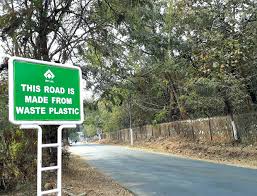
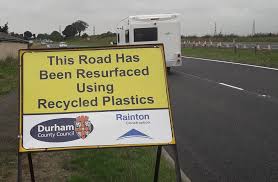
Dr Vasudevan found molten plastic has a excellent property of acting as a binder.
When molten plastic added to stone and bitumen mix Dr.Vasudevan found that plastic stuck fast and bound both the materials together.
plastics from water bottles , note book liners, single use plastic bags with a thickness of less than 70 microns are shredded and made into strips.
Asphalt is heated to a temperature 170 degree celsius(338F).Shredded Plastics (less than 70 microns) is sprinkled over it. The bits/strips of plastics are seemingly disappear melting into red heat. Heated bitumen is added next. Molten plastic then bound with bitumen and stones results in a shiny tar surface.
Regular road requires 10 tonnes of bitumen for each kilometer but when plastics are used bitumen is reduced to 9 tonnes and 1 ton of waste plastic is added instead.Thus 1 ton of bitumen is saved for each kilometer in road construction.
When
plastics heated above 270 degree Celsius decomposed and release toxic
gases but in road construction the plastic uses is softened at 170
degree Celsius does not release any toxic gases and also when plastic
coats are added to the hot bitumen and stone it properties change and
doesn’t breakdown when exposed to heat and light.
Worldwide adaptation
Considering the simplicity of the method many countries have adopted the plastic road concept. Australia, Indonesia, India, the United Kingdom, the United States, and many other countries have used technology which can incorporate plastic waste into an asphalt mix.
Hi Netizens, this 72nd Independence day as citizens we can sway our Indian Flags even more cheerfully. For the first time ever Chennai is going to breathe in garbage free air..Read on to know the various efforts taken by Greater Chennai Corporation in the regard of waste management
Door to door campaign
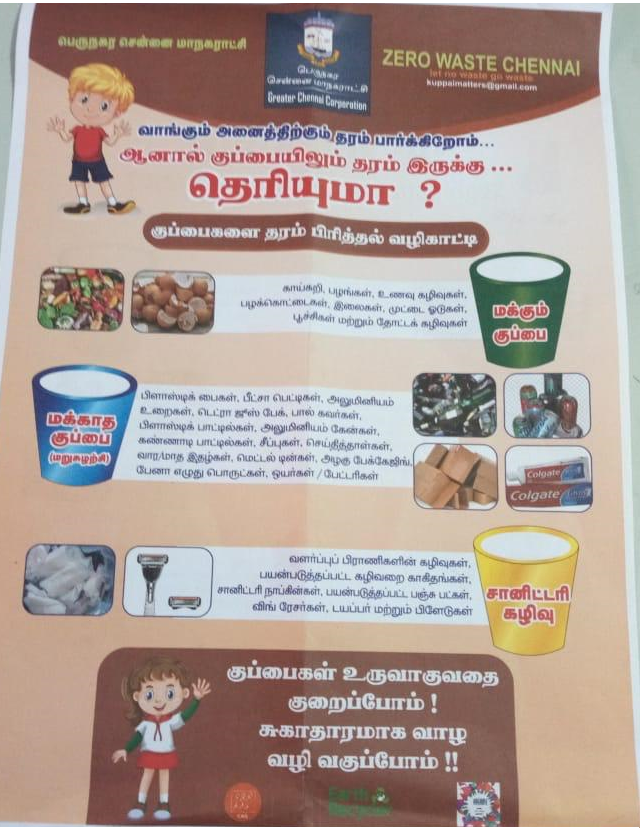
If you were a resident of Annanagar, Chennai you would have seen strange sights like people taking time off to play with their waste . That was the baby steps towards waste segregation in our city . The Corporation officials along with the sanitary workers reached out to the general public distributing pamplets and preaching the importance of waste segregation
Segregation awareness pamphlet
The Infrastructure setup
Microcomposting facility at Anakaputur
bio-CNG plant at Mahindraworld City
We have to welcome to move that our Garbage clearance trucks wont carry the garbage perfume anymore. This is because of the realization that garbage perfume is nothing other than natural gas /Methane which is a clean fuel. In this regard Micro-composting facilities are being set up in 200 wards in Chennai where the locally generated waste is segregated. Bio waste is turned into compost and other useful materials are recovered. The compost is a natural fertilizer . Because of this measures the Conservancy workers are able to earn extra income too. Further read here .
The parks and other government owned lands are being utilized for setting up mulching pits where the garden waste is composted. Even though the residents fear it may go haywire during monsoon seasons, the authorized maintenance personnel need to ensure that these set up is maintained properly .
Bio-waste as fuel-Biomethanisation plant
The process of recovering the generated natural gas from waste and using it to produce electricity is the purpose of bio methanisation plant . These energy recovery facilities have huge cost and require considerable land area too. One such functioning plant in Chennai is the Koyambedu Vegetable Market commissioned in 2005. The plant with the processing capacity of 30 tons per day can generate 250 KW power which is fed into the THEB grid. This plant covers an area of 60 acres and is maintained by the corporation of Chennai . The vegetable/ fruit and flower waste generated everyday powers this plant .
More such facilities are being planned in the city . Three bio-CNG plants are expected to be set up in Pallikarnai, Sholinganallur and Annanagar at a project cost of 9.3 crores. These plants will be both generating cum bottling facility . So gear up to see cars running on clean-fuel in near future. More.
Recycling train -Closing the loop
Ok Ok thats not a new mode of transport for our people . The city has got a brand new recycling enabling facility . You can drop the dry waste such as paper, plastic,leather,steel , glass and cloths in the respective containers .The materials will be redirected to the corresponding recycling facility. This is the currently installed facility at Thiruvanmiyur . More such are coming at Velachery, Saidapet, Guindy, Adayar and Beasant Nagar. Read here.
Whats my role?
The govt. must do. The govt does n’t care for the citizens. The govt will not provide. It is an end to these sentences. Each of must realize that we are the major chunk of any govt that rules us . The govt can act only as Facilitator for providing the necessary means . It is our individual responsibility to accept that the burning landfills which emit toxicity in land, sea and air in the suburban localities is due to our in-action . Little drops make a ocean. We need to support the hands that clear our garbage . This huge problem has the most simple solution .
Lets segregate our waste! . Lets breathe in freedom !
A bilingual blog on everything that matters to our Earth






 Recycle Mithra- இது புவி நேசர்களின் சங்கமம்